South Africa · Long-distance taxi industry

Every seat. Every name. Every journey.

Tlatsa is the digital Passenger Form for South Africa's long-distance taxis — a national passenger safety platform that makes sure no traveller is ever unaccounted for.

Scroll · Tsamaya

01Overview

A paper problem, solved with digital dignity

South Africa's minibus taxi industry carries more than 15 million passengers every day — yet passenger registration at the rank has never moved beyond a handwritten book. Queue marshals write names on paper, often illegibly, and the book sits open on a desk where anyone walking past can see your full name, ID number and home address. That is not registration. That is a data breach happening in plain sight — and it is illegal under POPIA.

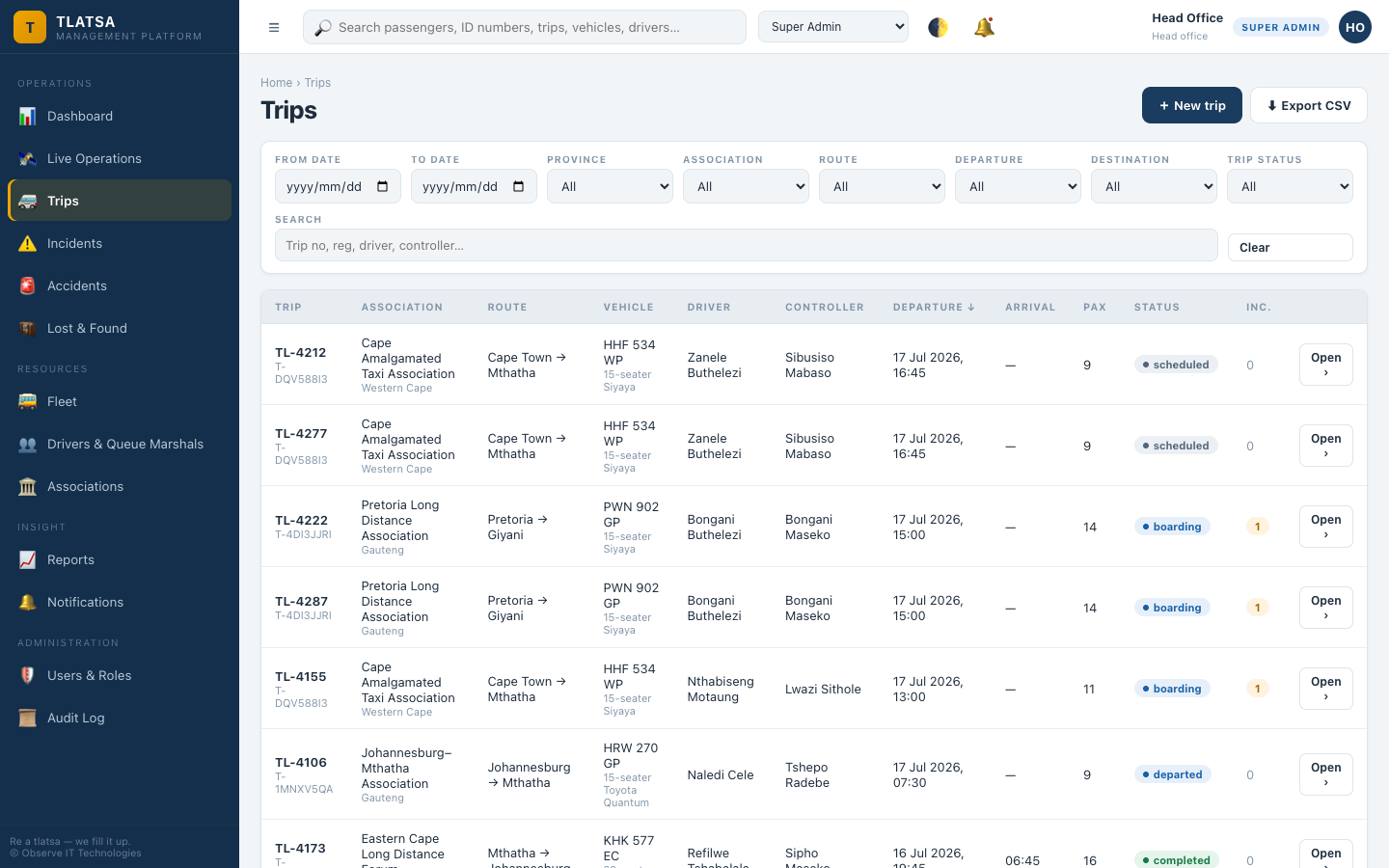
Tlatsa digitises the Tlatsa Form — the passenger register already in use at ranks nationwide. Every passenger's name, SA ID, verified phone number, destination and next-of-kin contact is captured on a tablet, validated instantly, and encrypted in the cloud. If a minor is travelling, their details are recorded too — a field the paper form never had. The moment the taxi departs, the local association office receives a digital copy of the sealed passenger list. So does the driver.

In an accident, every second counts. With Tlatsa, emergency services identify every passenger aboard in moments, reach verified next of kin directly, and produce a complete passenger record to support a Road Accident Fund (RAF) claim — records that previously did not exist.

Tlatsa FormJHB → MTHATHA · 07:42
Full NameThandiwe N. Mokoena
SA ID Number8705 *** *** 08  ✓ Verified
Cell · OTP Confirmed+27 82 *** 4521  ✓
DestinationMthatha, Eastern Cape
Next of KinSipho Mokoena · 083 *** 2209
Minor TravellingLebo Mokoena · 7 yrs · Daughter
Record sealed
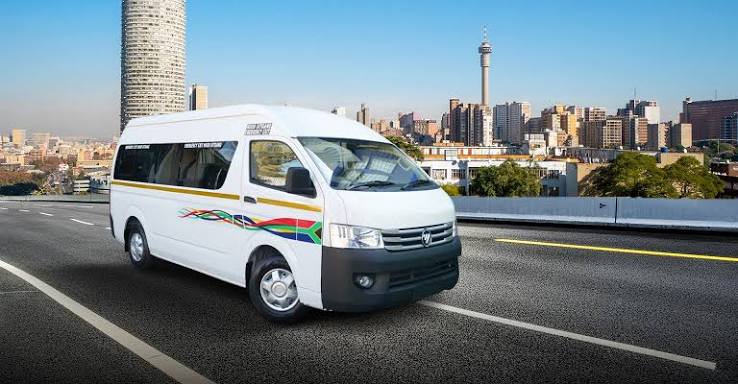
White minibus taxi with South African flag livery
The fleet Tlatsa is built for — Johannesburg

02How Tlatsa works

One route, six stops — from rank to record

Tlatsa follows the natural rhythm of the taxi rank. No new habits, no heavy training — the form simply rides along with the journey that already happens every day.

1
At the rank

The queue marshal captures the passenger details

At the rank, the queue marshal captures each passenger's details on the association's dedicated tablet. Full name, SA ID or passport number, destination and next-of-kin contact. If a minor is travelling, their name, date of birth and relationship to the adult are recorded — a field the paper form never had. POPIA consent is captured with a timestamp. Takes about two minutes per passenger.

2
Verification

ID validated. OTP sent. Phone confirmed.

The system validates the passenger's SA ID number and sends a one-time PIN (OTP) to the cell number entered. If the number doesn't receive the OTP, it is flagged immediately — bad or incorrect contact numbers are corrected at the rank, not discovered at the hospital. Returning passengers are auto-populated from their previous trip record.

3
Boarding

Passenger confirmed. Seat allocated.

Once details are captured and the OTP confirmed, the passenger is marked as boarded on the association's tablet. Their seat is allocated and the live passenger list updates instantly. The system prevents boarding beyond the vehicle's licensed capacity, catching overloading before the taxi leaves the rank.

4
Departure

Record sealed. Copies sent automatically.

The moment the taxi departs, the trip record locks — capturing every passenger, the driver, vehicle registration, departure point, destination, route and time. A digital copy is sent automatically to the local taxi association office. The driver receives their own digital copy. The record is encrypted in the cloud and cannot be altered after sealing.

5
If something goes wrong

Emergency response in seconds. RAF claims supported.

If an accident, fatality or medical emergency occurs, authorised emergency services, hospitals and law enforcement access the verified passenger list instantly. Next of kin are contacted within minutes — not days. The sealed, timestamped record is submitted directly to the Road Accident Fund (RAF) to support compensation claims, eliminating delays that currently leave families without answers for weeks.

6
After every journey

Data the industry can build on

Anonymised trip records flow automatically to operators, associations and SANTACO: daily passenger volumes, peak periods, popular routes, fleet utilisation rates. The same data informs transport authorities and the Department of Transport for route planning, operating licence management and IPTN compliance reporting — turning every trip into evidence for a smarter, safer industry.

03Why it matters

Six pillars of a safer industry

Tlatsa is more than an emergency contact database. It is a platform where government, operators, commuters, insurers, law enforcement, emergency services and communities work together to build a safer, more professional public transport industry.

POPIA-Compliant Data Protection

The open paper register is a POPIA violation. Anyone at the rank can see your name, ID and address. Tlatsa is built for legal compliance from the ground up.

  • Informed consent captured with a timestamp at registration
  • Encrypted cloud storage — not a book left on a desk
  • Data automatically deleted after 12 months
  • Audit trail for every record access
  • Accessible only to authorised personnel

Fixing What Paper Always Failed

The handwritten book at the rank has four critical failures. None of them exist in Tlatsa.

  • Typed entries eliminate illegible names entirely
  • OTP verification means no unverified or dead contact numbers
  • Private encrypted storage — no open list visible to bystanders
  • Cloud backup — impossible to lose, damage or destroy
  • ID number validation catches errors at point of capture

Protecting Minors in Transit

The current paper form has no field for minors. A child travelling on any long-distance taxi is invisible to the system. Tlatsa changes that permanently.

  • Minor's full name, date of birth and relationship to adult recorded
  • Unaccompanied minor status flagged at registration
  • Guardian contact captured separately
  • Minor details included in the sealed passenger list
  • Visible to emergency services in an incident — no guessing

Accident Response & RAF Claims

After an accident, RAF claims require verified documentation: who was in the vehicle, the route, the departure point. With a paper book — often in the taxi — that evidence is gone. With Tlatsa, it is already in the cloud before the taxi leaves the rank.

  • Complete verified passenger list available the moment an incident occurs
  • Driver, vehicle and route documented for every trip
  • Next of kin contacted within minutes, not days
  • Passenger record submitted directly to support RAF claims
  • Reduces delays, disputes and unresolved claims

Association & Driver Digital Copies

The moment a taxi departs the rank, two digital copies of the sealed passenger list are sent automatically — one to the local taxi association office, one to the driver. No clipboards. No radio check-ins. No guesswork.

  • Association office receives their passenger list copy at the point of departure
  • Driver holds their own digital copy for the duration of the trip
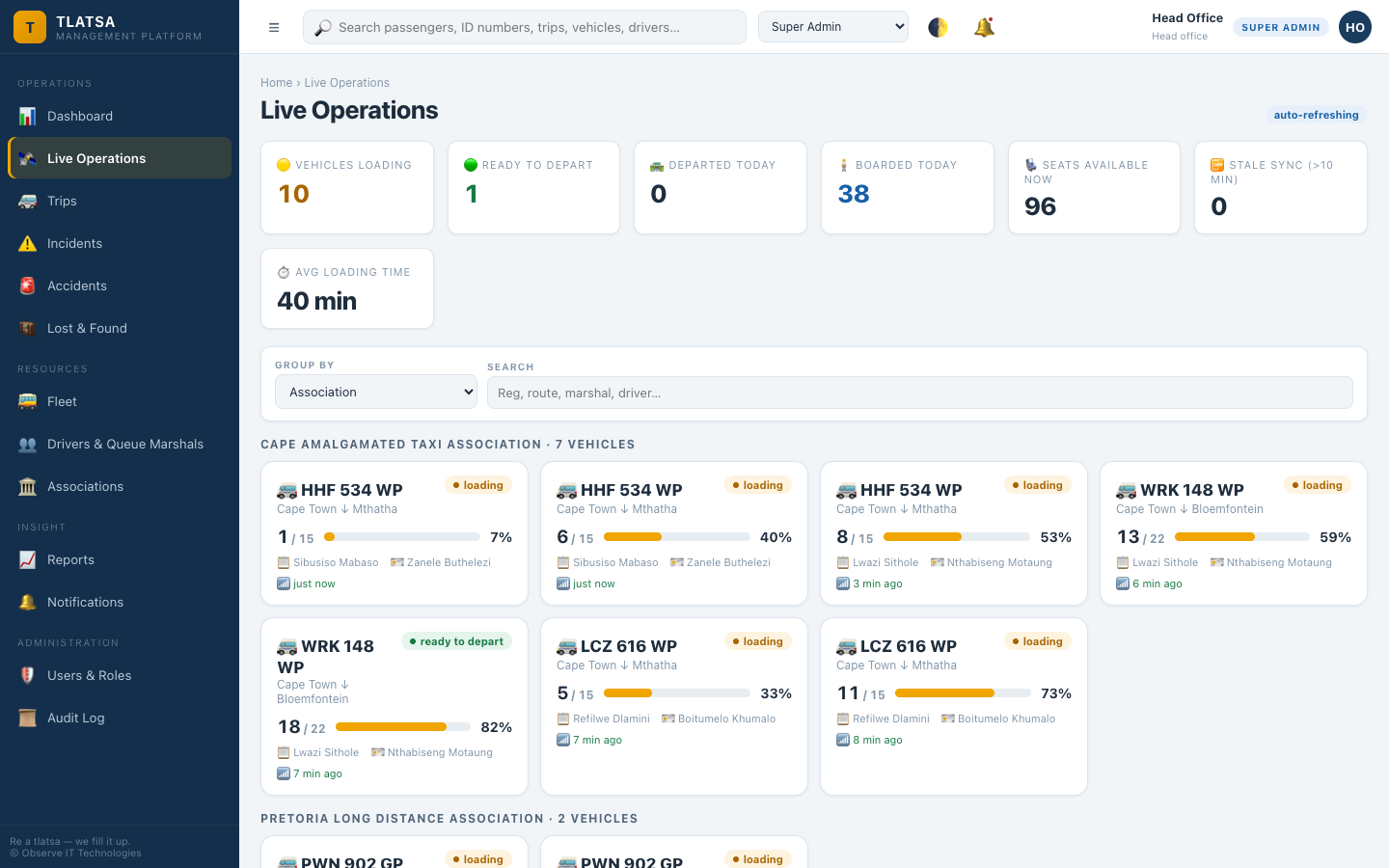
  • Live fleet visibility — which vehicles are on the road, who is aboard
  • Searchable records across all trips, routes and operators
  • Association meets its safety and governance obligations effortlessly

Industry Formalisation & SANTACO Alignment

SANTACO represents 1,300 local associations. Tlatsa sits inside that structure — giving associations the digital layer needed to formalise operations and engage confidently with government.

  • Directly aligned with National Taxi Lekgotla 2020 resolutions
  • Supports IPTN framework compliance requirements
  • Provides associations a verifiable passenger register for every route
  • Positions the industry for DoT and SANTACO data-sharing agreements
  • Anonymised route data available for transport policy planning

04Policy foundation

Grounded in SA's own
transport formalisation agenda.

The National Taxi Lekgotla 2020 identified missing passenger data, no formal complaints system, and unprofessional conduct as the industry's most urgent problems. Tlatsa is a direct, operational response to every one of them.

On missing passenger records: "The NTTT report noted the lack of formal guidelines on acceptable behaviour for both passengers and drivers, a lack of a formal structure to handle complaints and no process to listen to the needs of both passengers and drivers." — Professionalisation & Customer Care, National Taxi Lekgotla, Sept 2020
On the need for data collection: "Data is needed on traffic offence records of drivers and associations, records on the involvement of minibus taxis in road accidents. Complaints lodged against drivers." — Professionalisation & Customer Care, National Taxi Lekgotla, Sept 2020

On the backbone of mobility: "Minibus taxi services, or a variation of them, remain the backbone of public transport. They are the only choice of service in most rural and peri-urban areas and the majority of townships." — Professionalisation & Customer Care, National Taxi Lekgotla, Sept 2020

On the scale of responsibility: "Today the Taxi Industry is a multi-billion Rand industry that carries over 60% of South Africa's commuters." The commuters on those trips deserve verified, recoverable passenger records — Tlatsa provides exactly that. — Unity & Leadership, National Taxi Lekgotla, Sept 2020